
Key dates form the base of every coin series. Semi-key dates strengthen the middle of the set and raise the overall difficulty of completion. Both groups shape market prices because collectors follow predictable patterns. When one date is scarce, demand concentrates around it and pushes its price far above the rest of the series.
Many beginners see only the year on a coin and treat all old pieces as valuable, which leads to confusion. Scarcity does not come from age alone. It comes from mintage numbers, survival rates, hoard discoveries, and the way collectors behave.
Collectors often sort new finds with a free coin scanner and move straight to checking the year. The tool speeds up the initial review, but real decisions depend on deeper knowledge. So, right now we are going to check how scarcity forms, why specific years become key, and how these dates influence the long-term value of a collection.
Why Some Years Become Scarce
Several factors shape the structure of a series. Some are technical, some are historical, and some come from the market. When combined, they produce dates that remain difficult for decades.
Low Original Mintage
A small production run always matters. If very few pieces are issued by the mint, the series starts with a built-in shortage.
Examples:
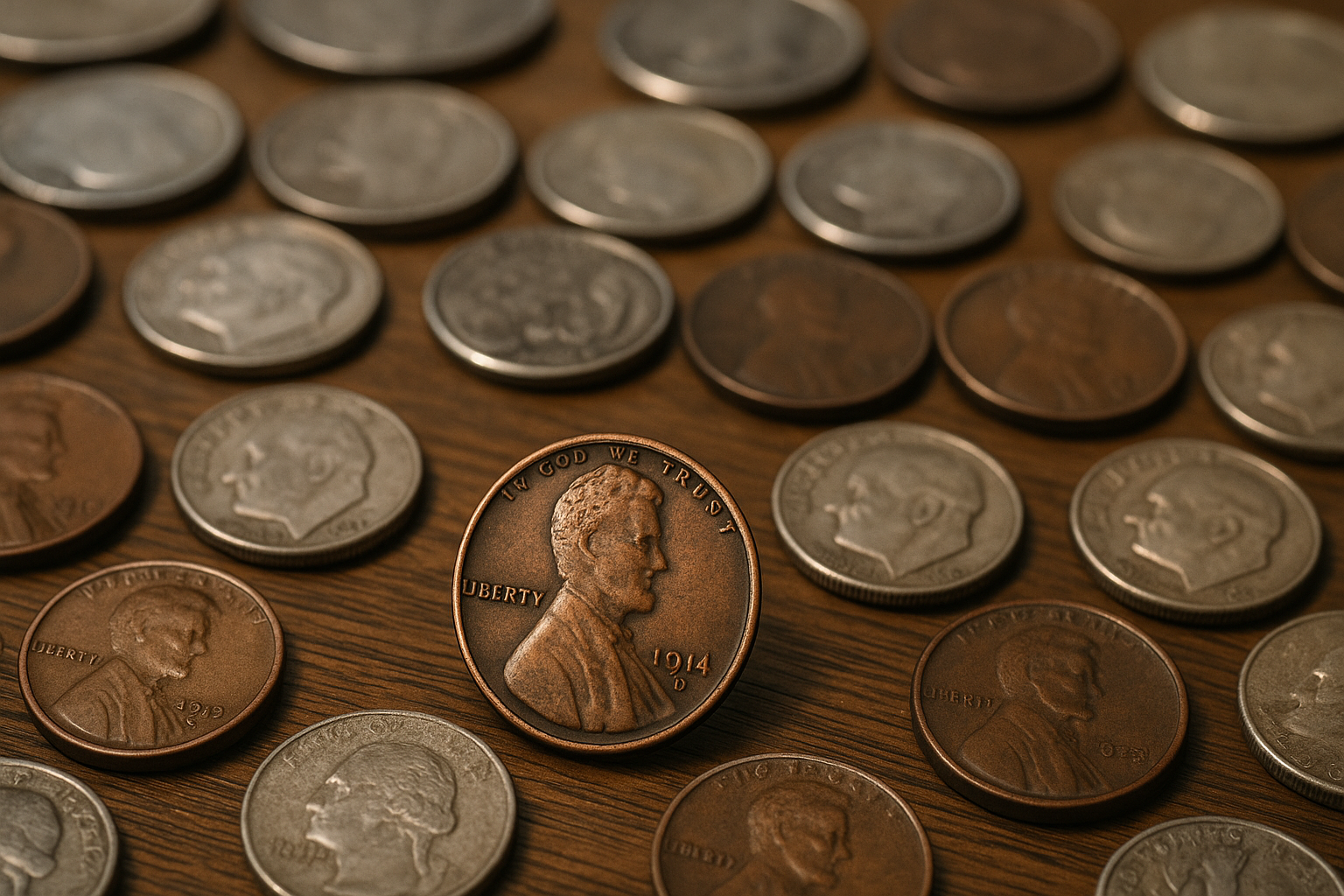
- 1914-D Lincoln Cent: 1,193,000 coins. Low output, high demand, and strong competition between collectors.
- 1877 Indian Head Cent: the lowest mintage in the entire series, making it the defining rarity for the set.
Small mintages occur during recessions, metal shortages, or transitions to new designs. These years become natural bottlenecks, and no market movement can compensate for the lack of available pieces.
Low Survival Rate
A low mintage is not the only factor. Even large mintages become scarce if the coins disappear from circulation or are destroyed. Over time, losses accumulate: circulation wear, damage, industrial melting, and disposal of worn pieces.
Examples:
- The 1931-S Lincoln Cent shows a stable pattern. The mintage was moderate, yet few coins survived in strong grades.
- The 1916 Barber Dime suffered from heavy circulation. Few pieces remained in fine condition, and the series ended soon after, which increased pressure from collectors.
Many mid-century silver coins also show low survival because they entered melting pots during market spikes. Any destruction of metal reduces the available supply and strengthens the key date status.
Historical and Economic Pressures
Years with unusual economic activity often produce unbalanced mintage patterns. Wars, metal shortages, design changes, and government reforms reshape the structure of the entire series.
Examples:
- 1949-S Franklin Half Dollar: silver supply restrictions created shortages. Surviving pieces remain limited.
- 1921 Morgan Dollar: the mint resumed production after the Pittman Act. The year carries mixed quality and uneven distribution, which affects availability.
Historical movement always has a long tail. When production or survival takes a hit, the effect continues for generations.
Rare Varieties Within a Common Year
Some years look ordinary until collectors discover a rare die variety. The year itself may be common, but a specific version of it becomes scarce.
Examples:
- 1955 Doubled Die Lincoln Cent: misaligned dies produced a dramatic doubled inscription. A small quantity entered circulation.
- 1937-D “3 Legs” Buffalo Nickel: over-polishing of a damaged die removed the front leg of the buffalo. The variety is a classic rarity.
These varieties complicate the market because collectors chase them within large common-year populations.
Key Dates in Major U.S. Series
Key dates coins exist in every long-running series. Each denomination has several years that remain scarce because of low mintages, low survival, unusual production conditions, or market pressure. Below, you can see some key dates pieces of the most collected U.S. series.
Lincoln Cents (1909–1958)
| Key Date | Reason | Notes |
| 1909-S VDB | Short initial run; initials removed early | High long-term demand due to design transition |
| 1914-D | Very low Denver output | Price rises sharply from mid grades upward |
| 1931-S | Reduced Depression-era circulation | Survivors in strong grades are limited |
| 1922 “No D” (Die Pair 2) | Mintmark lost from the worn die | Only one die pair is recognised as the true variety |
Lincoln key dates come from limited mintages, design adjustments, and heavy circulation. Collectors entered the series early, so most rare dates were identified before large quantities could be saved. These factors keep availability low and competition high.
Indian Head Cents
| Key Date | Reason | Notes |
| 1877 | Lowest mintage | Central rarity for 19th-century collectors |
| 1908-S | First San Francisco issue | Short run with limited distribution |
| 1909-S | Final year of the series | Collectors absorbed the supply early |
Indian Head key dates formed through short production periods and late branch-mint entries. Many pieces circulated for decades, which reduced the number of well-preserved examples.
Buffalo Nickels
| Key Date | Reason | Notes |
| 1913-S Type 2 | Low output after redesign | Weak strikes reduce high-grade supply |
| 1926-S | Extremely poor strikes; heavy wear | Strong survivors rare across all grades |
| 1937-D “3 Legs” | Die over-polishing error | Highly recognisable variety; constant demand |
Buffalo Nickel scarcity often relates to strike quality. Many coins left the mint with soft detail, and most circulated until worn. Varieties such as the 1937-D “3 Legs” add another layer of difficulty because they represent a small portion of the year’s output.
Mercury Dimes
| Key Date | Reason | Notes |
| 1916-D | Extremely small mintage | Severe scarcity in all grades |
| 1921 | Reduced production post-war | Limited numbers entered circulation |
| 1921-D | Low Denver output | Hard to find with sharp detail |
Mercury Dime rarities stem from abrupt shifts in production. Reduced output during economic downturns left few coins for later collectors, and many surviving pieces show heavy circulation.
Washington Quarters
| Key Date | Reason | Notes |
| 1932-D | Very low output during new design rollout | Scarce in all grades |
| 1932-S | Limited San Francisco production | Key date for every complete set |
The first-year Washington Quarters were struck in small quantities as the new design was introduced. Regular production resumed later, which kept both the 1932 branch-mint issues limited in supply and consistently difficult for collectors to obtain.
Morgan and Peace Dollars
| Key Date | Reason | Notes |
| 1889-CC | Low mintage; later melting | High demand from collectors of Carson City issues |
| 1893-S | Lowest regular-issue mintage | One of the rarest silver dollars in circulated grades |
Morgan Dollar scarcity reflects storage, melting, and uneven distribution. Many bags never reached collectors, and large quantities were destroyed under the Pittman Act. As a result, key dates remain difficult across all grades.
Peace Dollars
| Key Date | Reason | Notes |
| 1921 High Relief | Striking difficulties limited output | Distinct technical type within the series |
| 1928-P | Lowest mintage of the series | Permanent rarity with stable premium |
Peace Dollar rarities are concentrated in a few specific years. The 1921 High Relief is treated as a separate technical type, and the 1928-P is the most limited regular issue because of its low mintage.
Semi-Key Dates: Scarce but Accessible
Semi-key dates form the middle tier of many U.S. series. These years are not true rarities, but they remain harder to find than common issues. Their mintages were usually moderate, yet long circulation periods reduced the number of strong survivors. Semi-key dates hold steady demand because collectors need them for complete sets, and supply is limited across most grade levels.
Lincoln Cents
- 1909-S (without VDB)
- 1924-D
- 1911-S
These dates circulated heavily before collectors focused on preserving early Lincoln issues. The 1909-S without VDB did not attract the same early attention as the VDB variety, so many pieces show wear.
The 1924-D often appears with weak strikes and surface loss, which limits higher-grade availability. The 1911-S had a modest mintage, and few examples were saved in strong condition.
These factors keep all three dates consistently difficult in the mid and upper grades.
Mercury Dimes
- 1926-S
The 1926-S is noticeably scarce in collectible grades. Strike quality was low, and many pieces circulated until worn. Surviving examples with clear detail remain limited, which makes the date an essential semi-key for the series.
Standing Liberty Quarters
- 1927-S
The 1927-S is hard to locate with clean surfaces and full detail. The design wore quickly, and most coins lost sharpness early in circulation. Even with a moderate mintage, high-grade pieces remain scarce.
Morgan Dollars
- 1884-S
- 1892-S
Both dates show limited availability in higher grades. Many San Francisco dollars entered circulation rather than long-term storage, and most developed wear before collectors saved them. Uncirculated examples are uncommon, and the price gap between circulated and mint-state coins reflects this shortage.
Semi-key dates are affordable but still limited in supply. They help define the structure of a full set and give collectors a clear view of survival patterns within each series.
How to Distinguish Key Dates from Simply Old Coins
Old coins often mislead beginners. Age alone does not create rarity. Several structured checks help avoid mistakes:
- Check the original mintage. A low number increases potential scarcity, but only when survival aligns with it.
- Evaluate the survival rate. Many high-mintage coins show few survivors in collectible grades.
- Look at mintmarks. One year may exist in several versions. The rarest mintmark defines the key date.
- Review die varieties. Small design differences often produce premium prices.
- Study auction frequency. If a coin appears rarely at major events, scarcity is real.
These steps help determine whether a coin belongs to a key or semi-key category.

Why Market Demand Clusters Around Key Dates
Collector behavior reinforces scarcity. Once a year becomes known as key, competition increases. Each full set requires the same bottleneck years, which keeps pressure stable even when the rest of the series remains common.
This feedback loop stays strong across decades because most collectors build complete date-and-mintmark sets. Key dates move rarely, and many buyers hold them long-term. This limits availability and strengthens price resilience.
Semi-key dates act as stepping stones. They widen the market and give beginner collectors intermediate targets. Their presence reduces the gap between common pieces and central rarities. As a result, semi-key dates help shape the full price curve of a series.
Tools That Help Analyze Rare Dates
Modern tools help collectors review coin groups and check specific years. A coin appraisal app helps compare a coin’s condition with standard reference photos and grade descriptions.
These apps store images, typical wear points, and notes for different denominations, which makes it easier to keep evaluations consistent, especially when working with circulated sets or inherited boxes.
Collectors also use several established reference sources:
- Auction records: Heritage Auctions and similar platforms show past sales, high-grade examples, and price levels.
- PCGS price guide: provides U.S. market prices based on grade.
- NGC Census: shows how many certified coins exist in each grade.
- Greysheet: offers wholesale pricing used by dealers.
- Numista: lists mintages, varieties, and basic identification data for world coins.
These tools do not replace physical inspection. They help organise information, compare dates, and understand how rare or common specific issues are.
Conclusion
Key dates and semi-key dates shape how each series develops and how collectors build complete sets. These years appear less often, and their availability depends on mintage, survival, and grade. Understanding these factors helps you sort new finds, judge condition, and decide which pieces deserve priority.
Digital tools make this work easier. A coin worth app shows typical value ranges and helps you see how grade and mintmark influence price. If you want to organise your own collection and track important dates, try Coin ID Scanner. It stores clear coin cards, keeps your records consistent, and helps you work through mixed lots at a steady pace.
A simple approach is accurate information, careful inspection, and stable digital notes. It gives you a clearer view of which years matter most and how they fit into a complete set.