A 1960 quarter value for common examples stays tied to the market price of silver.
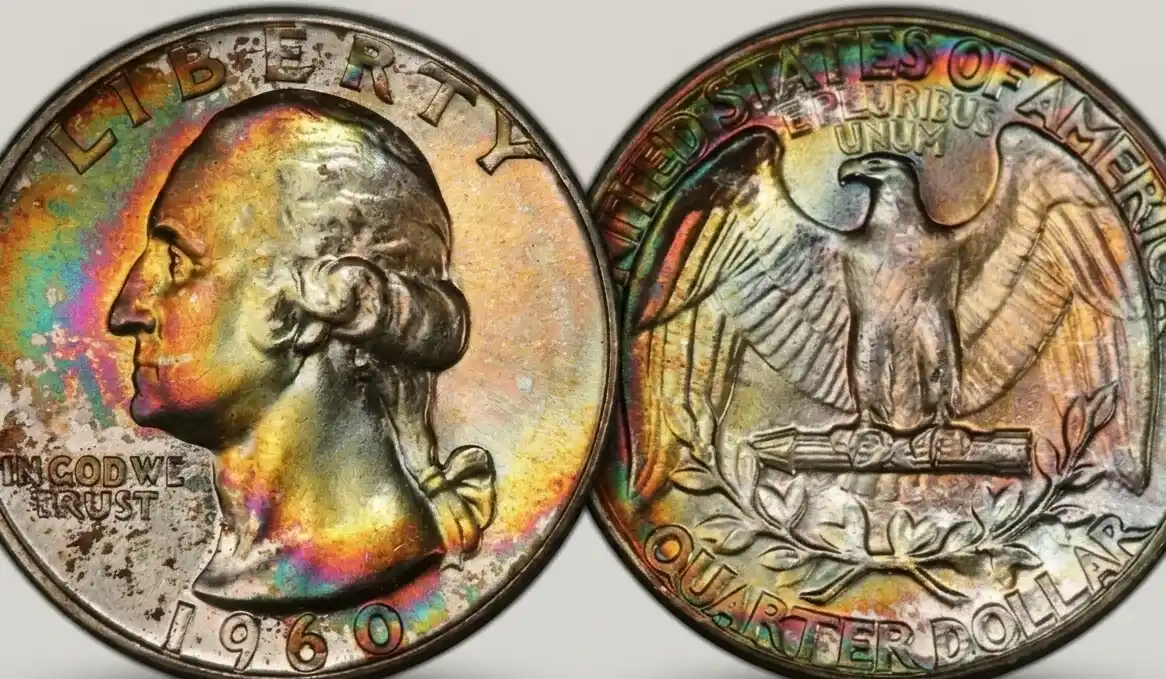
| Parameter | Measurement |
| Mass | 6.25 grams |
| Diameter | 24.30 millimeters |
| Composition | 90% silver and 10% copper |
| Edge | Reeded |
| Designer | John Flanagan |
Production Figures by Mint Facility
Total output was divided between two main manufacturing plants.
Philadelphia produced coins without a mint mark.
Denver identified its production with a D above the date on the back.
- Philadelphia: 29,164,000 units
- Denver: 63,000,324 units
- Proof (Philadelphia): 1,691,602 units
Denver’s output exceeds Philadelphia’s volume by more than double.
Grade Classification and Evaluation Criteria
The Sheldon Scale categorizes coins from 1 to 70 points.
Heavy wear on high relief areas lowers the final score.
Loss of detail on the eagle’s feathers indicates prolonged time in commerce.
- Good G4: Heavy wear with barely readable letter outlines
- Very Fine VF20: Moderate damage while keeping main design details
- About Uncirculated AU50: Slight friction marks on the highest relief points
- Mint State MS60: Total lack of wear with possible production scratches
- Mint State MS67: Exceptional luster lacking any visible defects
Pricing Dynamics for Circulated Coins
Current metal rates in 2026 maintain a baseline floor for all grades.
Silver price → $32 per unit → Base coin price $6
| Condition | Philadelphia (No Mark) | Denver (D) |
| G4 | $6.20 | $6.20 |
| VF20 | $6.50 | $6.50 |
| EF40 | $7.20 | $7.20 |
| AU50 | $8.50 | $8.30 |
| AU58 | $11.00 | $10.50 |
Annual price changes for low grades average 4%.
Evaluation of Mint State Coins
Items lacking signs of circulation trade significantly above face value.
Smooth surfaces without mechanical field damage increase asset liquidity.
Price for MS63 Philadelphia: $18
Price for MS63 Denver: $16
Percentage increase in value when moving from MS63 to MS65:
- Philadelphia: +150%
- Denver: +120%
Record Sales and Auction Statistics
Top prices occur for certified coins in the highest possible brackets.
A sale of a 1960 MS67+ PCGS in 2024 reached $4,320.
One 1960-D MS67+ example sold for $3,840.
Decreasing populations of perfect coins drive price growth.
Growth factors → Inventory scarcity → Competitive bidding
Annual value appreciation for MS67 grades sits at 12%.
Proof Quality Coins
Collector editions feature mirror fields and frosted details.
Striking technology for proofs involves using polished dies.
| Proof Type | Description | 2026 Price |
| Standard | Basic mirror finish | $14 |
| Cameo | Contrast between field and details | $45 |
| Deep Cameo | Intense frosted contrast | $320 |
Finding Deep Cameo examples in original sets happens rarely.
Impact of Professional Certification
Having a holder from a major firm confirms the object’s authenticity.
Without a certificate, high-tier coins lose up to 50% of market value.
Service costs for evaluation start at $30 per unit.
Authenticity checks remain mandatory for items exceeding $100.
- Expert grade determination
- Hermetic sealing in a plastic container
- Assignment of a unique ID number
- Data entry into verified coin registries
Philadelphia vs Denver
Philadelphia coins are not always more expensive despite lower mintages.
Large quantities of stored rolls affect the current supply.
Philadelphia output → Higher demand in grades above MS66
Denver output → More available options in the mid-range segment
Price difference at MS64 grade: $2 favoring Philadelphia.
Mint Errors and Varieties
Technical failures during production create unique auction lots.
Doubled image elements increase value several times over — you can see it with the coin checker app.
- Doubled Die Obverse: Clear doubling on the word Liberty
- Wrong planchet errors using other denomination blanks
- Image shifts exceeding 10%
A 25% off-center strike coin in 2026 can reach $280.
Surface Preservation and Patina
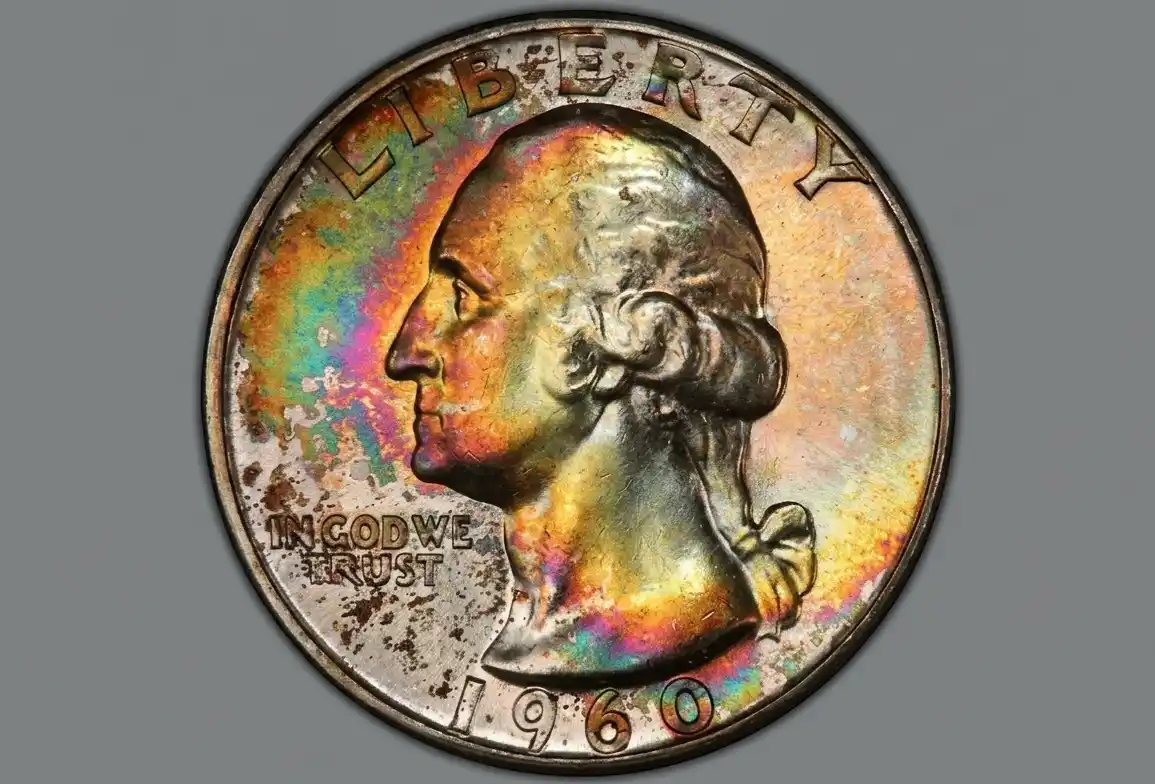
Natural oxidation on silver creates a protective layer on the metal.
Rainbow toning can increase the final price by 20%.
Artificial cleaning with abrasives destroys all collector value.
Cleaning signs → Parallel scratches → Unnatural shine
Devaluation for chemically washed items reaches 65%.
Rules for Safe Acquisition
Buying high-value positions requires following a verification protocol.
Using digital microscopes helps identify hidden defects.
- Checking weight against the 6.25-gram standard
- Studying the edge for signs of soldering
- Verifying the certificate number in the database
- Analyzing prices from completed auctions
Missing original luster suggests long-term storage outside capsules.
Storage and Collection Conservation
Metal requires protection from harsh environmental factors.
Sulfur in the air causes rapid darkening of silver.
- Using acid-free albums
- Keeping air humidity below 40%
- Avoiding skin contact with fingers
- Placing silica gel in safes
Proper storage prevents grade degradation over time.
Mintage Survival Statistics
Most 1960 quarters were melted during periods of high metal prices.
Destroying supplies in 1980 and 2011 reduced current availability.
Estimated survivors in MS67: under 500 units.
Survival estimate for MS65: roughly 5,000 examples.
Rarity is confirmed by low new registrations in grading registries.
Silver Coin Market Specifics
The 1960 quarter belongs to a transition period category.
Ending silver coinage in 1964 increased the status of earlier dates.
Investors view 1960 as an affordable alternative to pre-war issues.
Value-to-quality ratios make this year ideal for bulk investing.
Popularity among album collectors remains stable.
Identifying Authenticity at Home
Self-checks via the app to scan coins for value minimize the risk of buying fakes.
Imported copies often have mass discrepancies.
Weight of 6.00 grams instead of 6.25 grams → Base metal alloy
A ping test when dropped on a hard surface produces a clear ring.
Dull sounds indicate the use of non-precious metals.
Magnet tests allow instant removal of steel fakes.
Silver shows no magnetic properties.